Hydro Jetting Machine — The Contractor’s Buying Guide for 2026
Updated May 2026 | By HotJet USA
If you’re shopping for a hydro jetting machine, you’ve got a lot of options — and a lot of ways to get it wrong. Buy too small, and you’ll be turning away the jobs that actually pay. Buy the wrong type, and you’ll watch grease laugh at your machine. This guide walks you through what actually matters when you’re picking a hydro jetting machine that pays for itself instead of sitting in your shop.
Table of Contents
- What a Hydro Jetting Machine Actually Does
- The Three Specs That Matter (and One That Doesn’t)
- Hot Water vs Cold Water Hydro Jetting Machines
- Trailer, Skid, or Truck Mount?
- What a Real Hydro Jetting Machine Costs
- Common Mistakes Contractors Make
- Frequently Asked Questions
What a Hydro Jetting Machine Actually Does
A hydro jetting machine uses high-pressure water — usually 4,000 PSI at 10 to 18 GPM — pushed through a specialized nozzle to scour the inside of a drain or sewer line. It cuts through grease, roots, scale, sludge, and bio-film, leaving the pipe walls clean instead of just punching a hole through the clog.
That’s the difference between jetting and snaking. A snake clears a path. A hydro jetter cleans the pipe. And that’s why a jetting job pays $1,200 to $2,500 while a snake job pays $200 to $400.
- Grease and F.O.G. — Hot water emulsifies grease and flushes it out. Cold water can’t.
- Roots — A Warthog or Reaper nozzle at 4,000 PSI cuts roots like a hot knife.
- Scale and sludge — Bio-film and mineral buildup come off pipe walls clean.
- Restoring flow — You’re not just clearing a clog — you’re restoring the pipe to its original diameter.
The Three Specs That Matter (and One That Doesn’t)
When you’re comparing hydro jetting machines, ignore the marketing. These three specs are what separate a real machine from a toy:
- GPM (Gallons Per Minute) — Flow rate is what does the cleaning. Higher GPM moves debris out of the pipe faster. For commercial work, you want at least 10 GPM. For municipal mains, 18 GPM.
- PSI (Pounds Per Square Inch) — Pressure is what cuts through the obstruction. 4,000 PSI is the sweet spot for most drain work. Higher PSI without enough GPM is just a power washer with extra steps.
- Heat — Hot water (180°F+) is the difference between cleaning a grease line in 20 minutes versus 90 minutes — or not at all.
What doesn’t matter as much as people think? Hose length on paper. Most jobs use 50 to 150 feet. A 300-foot hose sounds great in a brochure, but if your machine doesn’t have the GPM to push water that far at full pressure, it’s useless.
Hot Water vs Cold Water Hydro Jetting Machines
This is the single biggest decision you’ll make. Get it wrong, and you’ll be replacing the machine in two years.
| Factor | Cold Water Hydro Jetter | Hot Water Hydro Jetter |
|---|---|---|
| Best for | Roots, scale, residential mains | Grease, F.O.G., commercial accounts |
| Restaurant capability | Limited — grease re-coats fast | Full — emulsifies and flushes grease out |
| Average revenue per job | $400–$900 | $1,200–$2,500 |
| Starting price | $39,995 (XtremeFlow II Honda) | $52,995 (HotJet II Single Axle) |
If you’re never going to touch a restaurant or apartment complex grease line, a cold water machine works. But the moment a property manager calls you about a clogged grease trap, your cold water jetter becomes a liability. Read the full hot vs cold breakdown here.
Trailer, Skid, or Truck Mount?
The mount matters almost as much as the machine itself. Each setup fits a different kind of operation:
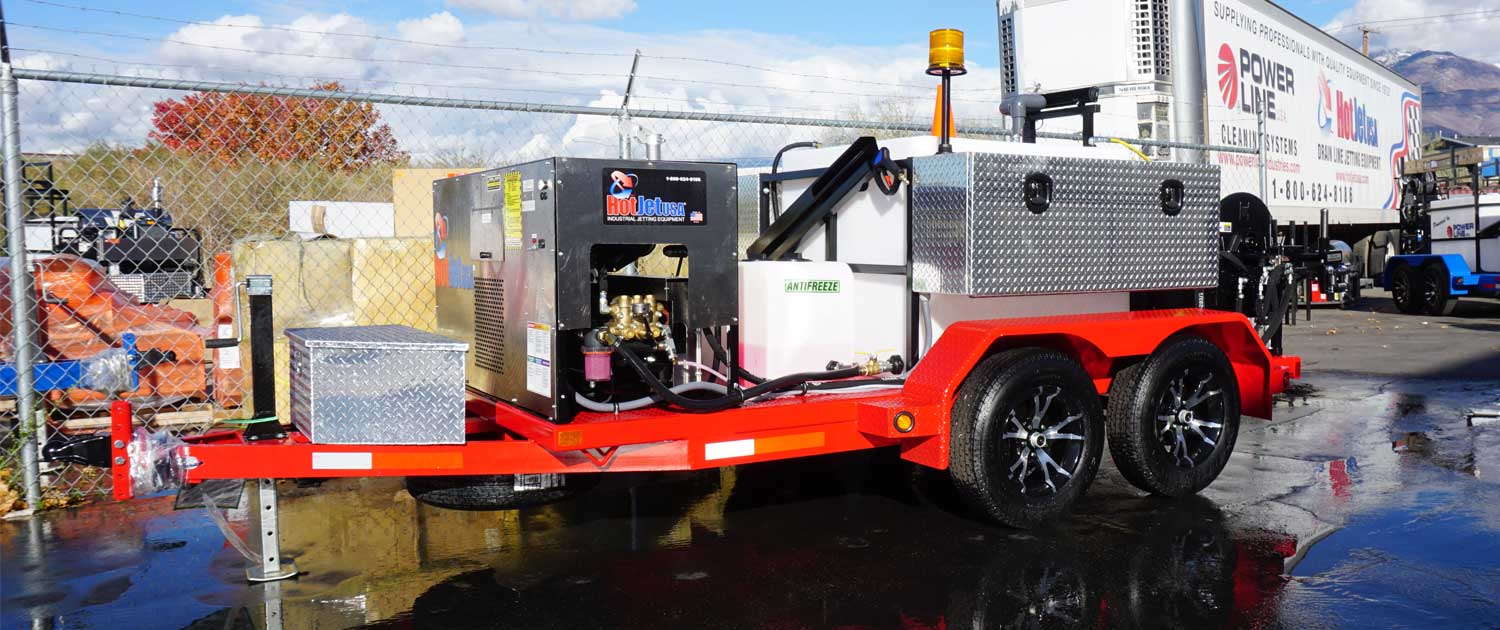
- Trailer mounted hydro jetting machine — Most popular. One operator, one truck, one jetter. Drop it at the job, pick it up when you’re done. Works for 95% of contractors. Browse our hot water trailer jetters here.
- Skid mounted — Bolts into a service van or pickup bed. Best for tight downtown jobs where a trailer can’t park. Permanent install — the truck becomes the jetter rig.
- Truck mounted — Combo trucks for municipal use. $300,000+ price tag — only makes sense for cities running daily mainline work.
For most plumbers, contractors, and small drain cleaning businesses, a trailer mount is the right answer. You can pull it with a half-ton truck, park it on residential driveways, and trade it between operators if you grow your fleet.
What a Real Hydro Jetting Machine Costs
Here’s what you’ll actually pay for a contractor-grade hydro jetting machine in 2026:
| Machine | Spec | Price |
|---|---|---|
| XtremeFlow II | 10 GPM @ 4,000 PSI cold water | $39,995 |
| HotJet II Single Axle | 10 GPM @ 4,000 PSI hot water | $52,995 |
| HotJet II Diesel (Yanmar) | Hot water diesel | $79,995 |
| HotJet III Dual Engine | 18 GPM @ 4,000 PSI municipal-grade | $79,995 |
Cheap online jetters in the $8,000 to $15,000 range are basically pressure washers in a fancy frame. They won’t last, they won’t perform under load, and you’ll be back shopping for the right machine in 18 months. Financing is available on every HotJet model — payments typically run less than two jobs per month.
Common Mistakes Contractors Make
After 25+ years building hydro jetting machines, we’ve seen every buying mistake there is. Here are the ones that cost contractors the most money:
- Buying based on PSI alone — A 5,000 PSI machine at 4 GPM cleans worse than a 4,000 PSI machine at 10 GPM. Flow moves debris.
- Going cold water to save money — Then losing every restaurant and grease trap call to a competitor with hot water.
- Buying a no-name brand online — No support, no parts, no training, no warranty.
- Skipping training — A jetter is a tool. Training is what turns it into a profit center. HotJet includes training with every machine.
- Not running the financing math — A $52,995 machine financed over 60 months is around $1,100/month. One commercial grease trap job pays the note for the month.
Frequently Asked Questions
How much does a hydro jetting machine cost?
A contractor-grade hydro jetting machine runs from $39,995 for a cold water trailer model to $79,995 for a dual-engine hot water municipal-grade unit. Cheap online jetters under $15,000 won’t hold up to commercial use and aren’t worth the savings.
What size hydro jetting machine do I need?
For residential and small commercial drain lines (2″–6″), 10 GPM at 4,000 PSI is the standard. For 8″–12″ municipal mains, step up to an 18 GPM machine like the HotJet III. Don’t oversize — a too-large jetter on a small line wastes water and risks pipe damage.
How long does a hydro jetting machine last?
A factory-direct, contractor-grade jetter from a manufacturer like HotJet USA lasts 10 to 15 years with proper maintenance — daily checks, regular oil changes, and winterizing. Cheap imports usually fail in 18 to 36 months.
Can one operator run a hydro jetting machine?
Yes. With a wireless remote and a hydraulic reel, one trained operator runs a trailer mounted hydro jetting machine on most jobs. That’s the entire point — one operator, one truck, one trailer, full revenue.
Ready to Take the Next Step?
Call HotJet USA today at 1-800-624-8186 to talk with a jetter expert. Whether you’re buying your first hydro jetting machine or upgrading your fleet, we’ll help you find the right machine for your business. Visit hotjetusa.com to explore our full lineup.
HotJet USA is the manufacturer of trailer mounted sewer and drain line jetters. For over 25 years, we’ve specialized in hot and cold water hydro jetting equipment — trailer mounted, skid mounted, and truck mounted. We also offer comprehensive jetter training classes. Call today for expert advice!