Diesel Sewer Jetter — When Diesel Is the Right Engine for Your Drain Cleaning Business
Updated August 2026 | By HotJet USA
If you’re shopping for a diesel sewer jetter and wondering whether it’s worth the premium over a gas-powered unit, you’re asking the right question. The engine choice matters more than most buyers realize — it affects your operating costs, your resale value, your maintenance schedule, and whether your equipment can handle the jobs you’re actually trying to win. Here’s the straight story on diesel vs. gas jetters, from a manufacturer that’s built both for 40+ years.
Table of Contents
- Diesel Sewer Jetter vs. Gas — The Core Difference
- Who Should Buy a Diesel Jetter
- Diesel vs. Gas Jetter Comparison
- Diesel Jetter Engine Options at HotJet USA
- Total Cost of Ownership — Does Diesel Pay Off?
- Frequently Asked Questions
Diesel Sewer Jetter vs. Gas — The Core Difference
A diesel sewer jetter runs on compression ignition — there’s no spark plug, no ignition coil, no carburetor to gum up. Diesel engines produce torque lower in the RPM range, which means your pump gets consistent, hard-pulling power even under load. Gas engines are lighter and cheaper upfront, but they spin differently and wear differently.
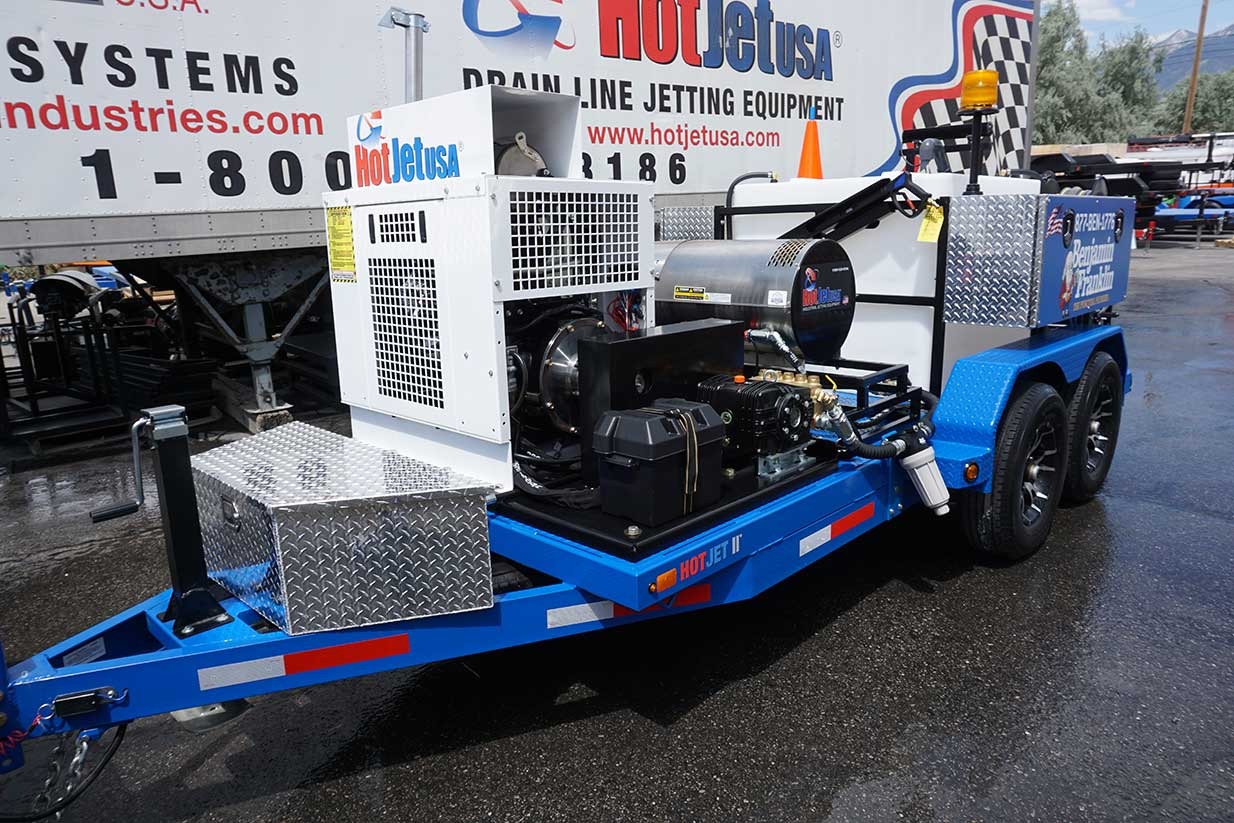
This isn’t a knock on gas-powered jetters. The HotJet II with a 35HP Vanguard gas engine is one of the best-selling drain cleaning machines in the country. Gas jetters are excellent for plumbing contractors, residential drain cleaning, and operators who run their machines hard on weekdays and park them on weekends. But there’s a category of work — and a category of operator — where diesel earns every dollar of its premium.
- Gas engines — Lower upfront cost, lighter weight, easier to find parts nationwide, excellent for contractors running 20-40 hours per week
- Diesel engines — Higher upfront cost, lower fuel cost per hour, longer engine life, better suited for high-hour municipal and commercial operations
Who Should Buy a Diesel Jetter
Not every contractor needs diesel. Here’s the honest breakdown of who diesel makes sense for — and who should stick with gas.
Diesel is the right call if:
- You’re running your jetter 40+ hours per week in commercial or municipal service
- You’re bidding city and county contracts that spec diesel equipment
- You’re fueling up at a fleet yard or farm where diesel is cheaper and more available
- You need engine longevity — diesel engines regularly hit 10,000+ hours vs. 3,000-5,000 for gas in comparable duty cycles
- You’re operating in cold climates where gas carburetors cause headaches
- You want stronger resale value when you upgrade your fleet
Gas is the better fit if:
- You’re a residential and light commercial plumber running 15-30 hours per week
- Upfront cost is the primary constraint and you’re financing your first jetter
- You need to find service and parts anywhere in the country, fast
- You’re adding a second or third unit to your fleet at a lower price point
The mistake we see is contractors buying gas when they should have gone diesel, then wishing they had — especially once they’re running municipal contracts at 50+ hours per week. Buy for the work you want, not just the work you have now.
Diesel vs. Gas Jetter Comparison
| Feature | Diesel Sewer Jetter | Gas Sewer Jetter |
|---|---|---|
| Upfront Cost | $64,995 – $79,995 | $39,995 – $52,995 |
| Fuel Cost Per Hour | Lower (diesel burns more efficiently) | Higher (gas at current prices) |
| Engine Lifespan | 8,000 – 15,000+ hours | 3,000 – 6,000 hours (hard use) |
| Maintenance Intervals | Longer between services | More frequent tune-ups |
| Torque / Low-RPM Power | Higher — better under pump load | Good, peaks at higher RPM |
| Cold Weather Start | Excellent (no carb issues) | Can be temperamental below 20°F |
| Resale Value | Stronger (diesel commands premium) | Good, lower than diesel |
| Municipal / GSA Spec | Often required | Accepted for smaller specs |
| Parts Availability | Good (Kohler/Yanmar dealer network) | Excellent (Vanguard/Honda everywhere) |
Diesel Jetter Engine Options at HotJet USA
HotJet USA offers two diesel engine configurations, and they’re not interchangeable — they’re designed for different use cases.
HotJet II Diesel — Kohler KDI Engine ($64,995)
The Kohler KDI is a Tier 4 final diesel that’s proven in industrial equipment globally. It’s a compact, direct-injection diesel with excellent cold-start capability and a strong dealer network. If you’re running commercial plumbing and light municipal work, the Kohler-powered HotJet II delivers diesel durability without the sticker shock of the premium configuration.
Specs: 10 GPM at 4,000 PSI, hot water, trailer-mounted, available in single or tandem axle.
HotJet II Diesel — Yanmar Engine ($79,995)
Yanmar is the gold standard for high-hour diesel in the jetting industry. If you’re running a city contract, a pipeline company, or an industrial maintenance operation, the Yanmar-powered HotJet II is the machine. Yanmar engines are purpose-built for continuous-duty applications, and their fuel consumption at full load is genuinely lower than comparable gas engines at the same output.
This is also the machine that holds its resale value best. A well-maintained Yanmar diesel jetter in good condition commands a strong price on the secondary market — something to think about if you plan to upgrade your fleet in 3-5 years.
Both diesel models include the same hot water jetting capability as the gas-powered HotJet II — critical for grease and F.O.G. work. Visit our hot water trailer jetter lineup to compare configurations side by side.
Total Cost of Ownership — Does Diesel Pay Off?
Here’s the math that most buyers don’t run before they sign. Let’s say you’re operating 50 hours per week and your diesel jetter costs $15,000 more than a gas equivalent.
Fuel savings example: At $3.50/gallon diesel vs. $4.00/gallon gas, with diesel burning approximately 15% less fuel per hour at equivalent output, you might save $1.50-$2.00 per hour in fuel. At 50 hours per week and 48 working weeks, that’s roughly $3,600-$4,800 per year in fuel savings alone.
Maintenance savings: Diesel engines have longer oil change intervals and fewer ignition-related repairs. Figure another $500-$1,500 per year in reduced maintenance costs for a high-hour operation.
Engine longevity: If your gas engine needs a rebuild or replacement at 4,000 hours and your diesel goes 12,000, you’ve effectively gotten two extra engine lifespans. At $5,000-$8,000 for a gas engine replacement, that’s real money over the life of the machine.
For a contractor running 200+ hours per month, diesel typically reaches break-even within 3-5 years and then runs ahead. For a part-time operator doing 20 hours per week, gas wins on total cost. Read our full jetter buying guide for more on how to calculate your true cost of ownership.
You can also check our jetter financing options — both diesel models qualify for Section 179 full deduction in the year placed in service, which changes the math significantly if you’re buying late in the calendar year.
Frequently Asked Questions
Can a diesel sewer jetter handle the same pipe sizes as a gas jetter?
Yes — the pump specs are identical. The HotJet II diesel delivers 10 GPM at 4,000 PSI regardless of whether the engine is gas, Kohler diesel, or Yanmar diesel. You’re cleaning the same pipe sizes, using the same nozzles, with the same reach. The engine choice affects durability and operating cost, not cleaning performance.
Is diesel harder to maintain in the field?
Not significantly. Diesel engines have fewer components that wear out — no spark plugs, no ignition timing, no carburetor. The main diesel-specific maintenance is fuel quality (use good fuel and anti-gel in cold weather), glow plug checks on older engines, and water separator monitoring. Most contractors who switch to diesel find the maintenance simpler, not harder.
Do municipalities actually require diesel?
Some specs require it, some don’t. Larger municipalities running 24/7 operations or specifying Tier 4 emissions compliance often require diesel. GSA contracts may include engine-type specifications. If you’re bidding government work, get the spec sheet before you buy your machine — then call us and we’ll tell you exactly which unit fits.
What’s the lead time on diesel models?
Diesel models are built to order and typically ship in 4-8 weeks depending on the engine supply chain. Gas models in our standard configurations often ship faster. Plan ahead if you’re buying diesel for a contract start date.
Ready to Take the Next Step?
Call HotJet USA today at 1-800-624-8186 to talk with a jetter expert. Whether you’re buying your first jetter or upgrading your fleet, we’ll help you find the right machine for your business. Visit hotjetusa.com to explore our full lineup.
HotJet USA is the manufacturer of trailer mounted sewer and drain line jetters. For over 25 years, we’ve specialized in hot and cold water hydro jetting equipment — trailer mounted, skid mounted, and truck mounted. We also offer comprehensive jetter training classes. Call today for expert advice!