Commercial Jetting Jobs — How to Bid, Price, and Win the Work That Actually Pays
Updated August 2026 | By HotJet USA
Commercial jetting jobs are where the real money is. If you’re still running residential drain calls at $250 a pop, you’re leaving serious revenue on the table — because commercial accounts pay per linear foot, sign maintenance contracts, and call you back every 90 days like clockwork. But you can’t win those contracts if you don’t know how to bid them. This guide walks you through exactly how to price, structure, and win commercial jetting work so you’re not just doing the job — you’re building a business around it.
Table of Contents
- Why Commercial Jetting Is Different From Residential
- The Two Main Pricing Models: Per-Foot vs. Flat Rate
- How to Price Per Linear Foot
- When Flat Rate Makes Sense
- What to Include in a Commercial Jetting Bid
- Recurring Maintenance Contracts: The Real Money
- Equipment Requirements for Commercial Accounts
- Frequently Asked Questions
Why Commercial Jetting Is Different From Residential
Residential jetting is transactional. A homeowner calls because something’s backed up — you jet it, you leave, and you might not hear from them again for two years. Commercial jetting is relational. Restaurants, apartment complexes, shopping centers, and municipalities have pipes that need regular attention, and they want one contractor they can count on, not a different guy every season.
The difference shows up in your revenue. A residential jetting call might gross you $300–$600. A commercial jetting contract for a 10-unit restaurant strip mall? That’s $2,000–$5,000 per visit, four times a year. Do the math: one commercial account can outperform your entire residential route in a single afternoon.
Commercial jobs also tend to be more technically demanding. You’re dealing with:
- Longer pipe runs — 200+ feet from cleanout to main
- Heavier F.O.G. deposits — restaurants and food processing facilities
- Larger pipe diameters — 6-inch, 8-inch, and 10-inch laterals
- Tighter scheduling windows — restaurants want you before 6 AM or after midnight
- Documentation requirements — some municipalities and grease trap inspectors require proof of service
That means you need the right equipment going in. A 3 GPM residential machine won’t cut it on a grease-packed 8-inch line. We’ll cover equipment specs below.
The Two Main Pricing Models: Per-Foot vs. Flat Rate
There are two ways to price commercial jetting jobs, and the right model depends on the job type. Most experienced contractors use both — choosing per-foot for unknown or complex runs, and flat rate for predictable recurring accounts.
| Pricing Model | Best For | Typical Range | Pros |
|---|---|---|---|
| Per Linear Foot | First-time jobs, complex runs, unknown pipe condition | $3–$8 per foot | Protects you if the job runs long; scales with actual work |
| Flat Rate | Recurring maintenance, known pipe layouts, contract accounts | $300–$1,500 per visit | Easy for clients to budget; builds predictable revenue for you |
How to Price Per Linear Foot
Per-foot pricing is the industry standard for first-time commercial jetting calls when you don’t know what you’re walking into. Here’s how to build your number:
- Base rate: $3–$5 per foot for standard 4-inch lines with moderate buildup
- Heavy F.O.G. upcharge: Add $1–$2 per foot for grease-packed restaurant lines
- Large diameter upcharge: Add $1–$3 per foot for 6-inch or larger pipe
- Minimum charge: Always set a minimum — typically $250–$400 regardless of footage
- Travel/mobilization: Add a flat fee for jobs over 30 miles from your shop
Example: A restaurant with 150 feet of 4-inch lateral and known grease buildup — at $5 per foot plus a $1.50 F.O.G. upcharge — comes to $975. That’s a legitimate number for a 2-hour job with the right equipment. If the pipe is 6-inch, add another $200. Don’t apologize for the rate — commercial clients expect professional pricing.
Pro tip: Walk the job before you bid it whenever possible. Look for the number of cleanout access points, estimate total pipe run from the building’s grease traps to the city main, and note the pipe material (cast iron behaves differently than PVC under high-pressure jetting).
When Flat Rate Makes Sense
Once you’ve done a job once and you know the layout, flat rate pricing builds a better business relationship. A property manager or restaurant owner doesn’t want to negotiate footage every quarter — they want a number they can put in the budget. Give them one.
To build a flat rate, take your per-foot job total from the first visit and add 10–15% as a buffer. Then offer a maintenance contract discount of 10% off that number for clients who commit to quarterly service. You end up with a slightly lower per-visit rate, but you’ve just locked in guaranteed revenue for the next 12 months. That beats chasing one-time calls.
Flat rate is also the right model for apartment complexes and shopping centers where you’re jetting multiple units in a single visit. Calculate your expected time on-site, multiply by your hourly rate ($150–$250/hr depending on your market), and add mobilization. Round up to the nearest $50.
What to Include in a Commercial Jetting Bid
A commercial jetting bid isn’t just a number on a napkin — it’s a professional document that wins or loses the job. Here’s what every bid should include:
- Scope of work — specific pipe segments, footage estimate, access points
- Service frequency — one-time vs. quarterly vs. monthly
- Equipment specs — PSI, GPM, hose length (this matters for municipal and commercial bids)
- Pricing breakdown — per-foot or flat rate, with any upcharges clearly listed
- Service report/documentation — state whether you’ll provide before/after camera footage
- Payment terms — net 30 for commercial, due on completion for restaurants
- Insurance and licensing — commercial clients require proof; carry at least $1M general liability
A clean, professional bid document positions you as a serious commercial contractor — not just a plumber with a jetter. The clients paying $2,000+ per visit want to see that you operate like a business. HotJet USA equipment comes with documentation support that helps you present professional specs to commercial clients.
Recurring Maintenance Contracts: The Real Money
The smartest play in commercial jetting isn’t the big one-time job — it’s the recurring maintenance contract. Here’s why: a restaurant’s grease trap and lateral lines will plug again. Guaranteed. The only question is whether they call you or someone else.
If you lock in a quarterly maintenance contract with 10 restaurants at $600/visit, that’s $24,000 a year in predictable, scheduled revenue — before you take a single emergency call. Add another 10 apartment complexes at $400/quarter, and you’re at $40,000 in contracted annual revenue. That’s the foundation of a real drain cleaning business, not a hustle.
To pitch maintenance contracts effectively:
- Show them before/after camera footage from the first job — visual evidence of F.O.G. buildup is the best sales tool you have
- Explain the cost of a sewer backup vs. the cost of prevention — a restaurant that floods loses $5,000–$20,000 in a single night
- Offer a service agreement with priority emergency response — commercial clients pay for reliability
- Bundle in drain treatment products like Total-C between service visits to extend the clean and add a monthly revenue stream
Check out our guide on building a profitable drain cleaning business for more on structuring your commercial operations.
Equipment Requirements for Commercial Accounts
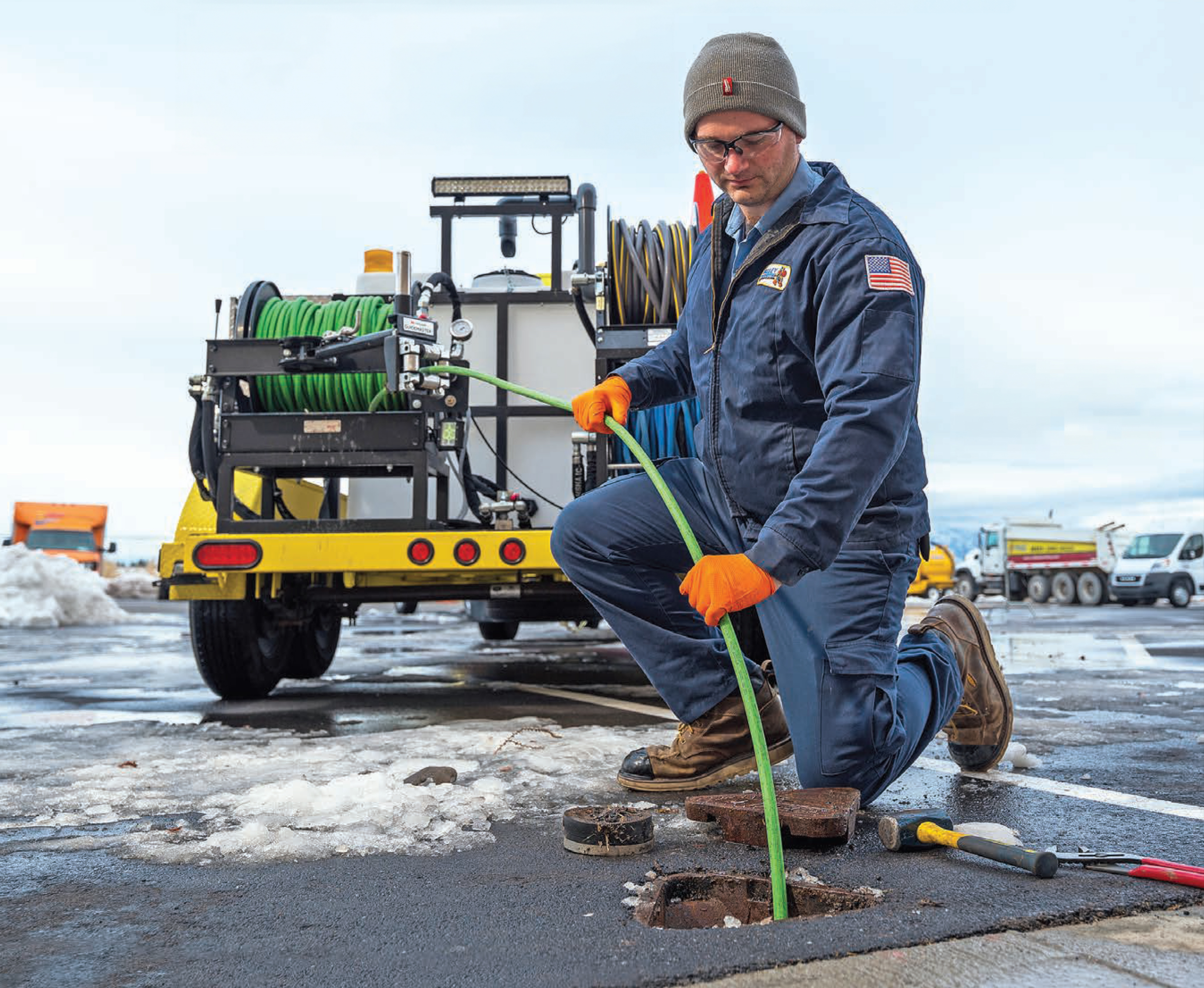
You can’t walk into a commercial jetting contract with a residential-grade machine. Commercial accounts have specific needs that require real horsepower and flow rate — not just PSI on a spec sheet.
Here’s what commercial clients need from your equipment:
- Minimum 8 GPM for 4-inch commercial lines — 10 GPM is the professional standard
- Hot water capability for restaurant accounts — cold water moves grease; hot water emulsifies it. If you’re bidding restaurant contracts without a hot water jetter, you’re underselling yourself and underperforming the job
- 3,000–4,000 PSI for cutting through hardened F.O.G. and root intrusion
- 300+ feet of hose for long commercial laterals
- Heavy-duty hose reel with variable-speed power rewind — manual reeling 300 feet of pressurized hose gets old fast
The HotJet II series delivers 10 GPM at 4,000 PSI with on-demand hot water — it’s purpose-built for exactly this kind of commercial work. For municipal-grade jobs and larger pipe, the Big Daddy Jetter series handles high-capacity applications. Don’t show up to a commercial account underpowered — you’ll lose the contract before you finish the first job.
Frequently Asked Questions
What’s a realistic first-year revenue goal for commercial jetting?
A solo operator with one hot water trailer jetter who lands 5–8 recurring commercial accounts in the first year can realistically generate $80,000–$120,000 in annual revenue. Add emergency call revenue on top of maintenance contracts and that number climbs fast. The key is landing those anchor accounts early and building your schedule around them.
Do I need a license to do commercial jetting work?
Licensing requirements vary by state and municipality. Many states require a plumbing or drain cleaning contractor’s license for commercial work. Some municipalities also require a business license and proof of insurance before awarding service contracts. Check your local requirements before bidding — showing up with proper credentials is a competitive advantage when commercial clients are vetting contractors.
How do I compete against larger plumbing companies for commercial contracts?
Owner-operators have one advantage that big plumbing companies can’t match: you show up yourself, every time. Commercial clients know that when they call a large company, they might get a different tech each visit. When they call you, they get you — someone who knows their system, their schedule, and their pipes. Lead with that. Then back it up with professional equipment, clean documentation, and competitive pricing.
Ready to Take the Next Step?
Call HotJet USA today at 1-800-624-8186 to talk with a jetter expert. Whether you’re buying your first jetter or upgrading your fleet to handle commercial accounts, we’ll help you find the right machine for your business. Visit hotjetusa.com to explore our full lineup.
HotJet USA is the manufacturer of trailer mounted sewer and drain line jetters. For over 25 years, we’ve specialized in hot and cold water hydro jetting equipment — trailer mounted, skid mounted, and truck mounted. We also offer comprehensive jetter training classes. Call today for expert advice!