Sewer Jetter PSI and GPM Guide — How to Match Your Machine to the Job
Updated April 2026 | By HotJet USA
Every sewer jetter on the market advertises two numbers: PSI and GPM. Pounds per square inch. Gallons per minute. If you’re shopping for sewer jetting equipment — or wondering why your current rig can’t keep up — these two specs tell you almost everything you need to know. Get the balance right and you’ll clear lines fast, bid bigger jobs, and build a reputation. Get it wrong and you’re stuck fighting the pipe all day.
Table of Contents
- What PSI Does (Cutting Power)
- What GPM Does (Flushing Power)
- PSI vs. GPM — Which Matters More?
- Pipe Size Matching Table
- HotJet Models by GPM and PSI
- Common Mistakes
- Frequently Asked Questions
What PSI Does — Cutting Power
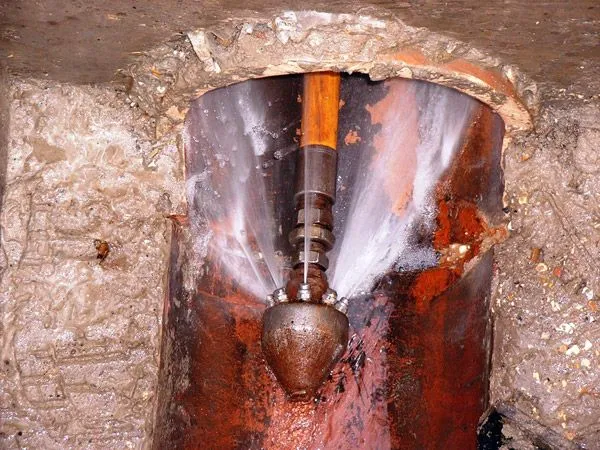
PSI is your cutting force. It’s the pressure behind each jet stream as it hits the pipe wall. Higher PSI means more ability to slice through roots, break apart mineral scale, and punch through hardened grease deposits. Think of PSI like the sharpness of a blade — the sharper it is, the easier it cuts.
Most professional cold water jetters and hydro jetter units run at 3,500 to 4,000 PSI. That range handles the vast majority of residential and commercial drain cleaning work. Going above 4,000 PSI is rarely necessary for sewer lines and actually increases the risk of damaging older clay or Orangeburg pipe.
Bottom line: 4,000 PSI is the industry sweet spot. You don’t need more — you need to pair it with the right GPM.
What GPM Does — Flushing Power
If PSI is your blade, GPM is your muscle. Gallons per minute determines how much water you’re pushing through that pipe. And here’s what a lot of guys miss — it’s GPM that actually moves debris out of the line. You can cut all day with high PSI, but if you don’t have enough flow to flush the cuttings downstream, you’re just rearranging the problem.
More GPM also means your nozzle travels through the pipe faster and with more authority. On bigger pipe — 6 inches and up — you need serious flow to fill enough of the pipe cross-section to create the hydraulic push that clears the line. A hydro jetter with 8 GPM might clean a 3-inch lateral just fine, but throw it at an 8-inch main and you’re wasting your time.
This is why experienced operators almost always recommend buying more GPM when they have to choose between the two.
PSI vs. GPM — Which Matters More?
Here’s the straight answer: GPM wins for most sewer work. Not close.
PSI gets all the marketing attention because bigger numbers sell. But ask anyone who’s been jetting for 10+ years and they’ll tell you the same thing — they wish they’d bought more flow from the start. You can always regulate PSI down with a dump gun or pressure regulator. You can’t create GPM that your pump doesn’t have.
There are exceptions. If you’re dealing with heavy root intrusion or rock-hard calcium deposits, you’ll want every bit of that 4,000 PSI working for you. Hot water trailer jetters are another game-changer for grease — the heat does the cutting work so you can focus your flow on flushing.
But for everyday sewer and drain line cleaning? Buy the GPM. You won’t regret it.
Pipe Size Matching Table
This is the chart you want taped to your trailer. Match the pipe you’re cleaning to the GPM and PSI range that’ll actually get the job done.
| Pipe Diameter | Application | Recommended GPM | Recommended PSI |
|---|---|---|---|
| 2″ – 4″ | Residential laterals | 8 – 10 GPM | 3,500 – 4,000 PSI |
| 4″ – 8″ | Commercial lines | 10 – 12 GPM | 4,000 PSI |
| 8″ – 12″ | Municipal mains | 18 – 20 GPM | 4,000 PSI |
| 12″+ | Heavy municipal / industrial | 20+ GPM | 4,000 PSI |
Notice the pattern? PSI stays pretty flat at 4,000 across the board. It’s the GPM that scales with pipe size. That’s the whole point — bigger pipes need bigger flow.
HotJet USA Models by GPM and PSI
So what does HotJet build to cover these ranges? Here’s the lineup, matched to the work they’re designed for.
| Model | GPM | PSI | Best For |
|---|---|---|---|
| XtremeFlow II Honda | 12 | 4,000 | Residential & light commercial |
| HotJet II | 10 | 4,000 | Residential + grease lines (hot water) |
| XtremeFlow III Dual Engine | 18 | 4,000 | Commercial & light municipal |
| HotJet III Dual Engine | 18 | 4,000 | Municipal + grease (hot water) |
| Big Daddy Ford Gas | 20 | 4,000 | Heavy municipal & industrial |
Every one of these is a trailer mounted sewer jetter — built in-house at HotJet’s Texas facility. The hot water models (HotJet II and III) heat water up to 210°F, which is a massive advantage on grease-packed restaurant and commercial kitchen lines. The cold water jetter models (XtremeFlow series) deliver raw flow at a lower price point.
Not sure which model fits your business? Check out 7 Things to Look for in a Jetter for a deeper breakdown of what to evaluate before you buy.
Common Mistakes When Choosing PSI and GPM
Buying Too Much PSI, Not Enough GPM
This is the number one mistake we see. A guy buys a 5,000 PSI unit with 4 GPM because the pressure number looks impressive on paper. Then he gets on a job with an 8-inch municipal line and wonders why the debris won’t move. The answer’s simple — 4 GPM couldn’t flush a garden hose on that diameter. You need flow.
Undersizing for the Job You Want
Don’t buy a jetter for the work you’re doing today. Buy it for the work you want to be doing in two years. If you’re cleaning residential laterals now but eyeing commercial contracts, don’t grab a 10 GPM unit — jump to 12 or 18. The price difference is a fraction of what you’ll earn on bigger jobs. A trailer mounted sewer jetter is a 10-to-15-year investment. Size it right the first time.
Ignoring Hot Water for Grease Work
Cold water can blast grease off the pipe wall, but it re-solidifies 20 feet downstream. Hot water sewer jetting equipment actually emulsifies the grease so it flushes out of the system completely. If restaurants, food processing, or commercial kitchens are part of your market, hot water vs. cold water is a decision worth getting right.
Frequently Asked Questions
What PSI and GPM do I need for residential drain cleaning?
For standard residential laterals (2″ to 4″ pipe), you’ll want 8 to 10 GPM at 3,500 to 4,000 PSI. That’s enough cutting power for roots and scale, with enough flow to flush everything out of a residential line. The XtremeFlow II at 12 GPM / 4,000 PSI gives you headroom to handle light commercial work too — which is why it’s one of HotJet’s most popular machines.
Can too much PSI damage pipes?
Yes. Older pipe materials like clay, Orangeburg, and thin-wall PVC can crack or collapse under excessive pressure, especially at close range with a focused nozzle. That’s why most professional sewer jetting equipment tops out at 4,000 PSI — it’s the sweet spot between cutting power and pipe safety. An experienced operator also controls effective PSI by adjusting nozzle size and standoff distance.
Why do experienced operators prioritize GPM over PSI?
Because GPM is what actually clears the line. PSI cuts the obstruction, but GPM creates the hydraulic force that pushes debris downstream and out of the pipe. On anything larger than a 4-inch line, you need serious flow volume to fill enough of the pipe to move material. You can always dial PSI down with a regulator — you can’t add GPM your pump doesn’t have.
Ready to Take the Next Step?
Call HotJet USA today at 1-800-624-8186 to talk with a jetter expert. Whether you’re buying your first jetter or upgrading your fleet, we’ll help you find the right machine for your business. Visit hotjetusa.com to explore our full lineup.
HotJet USA is the manufacturer of trailer mounted sewer and drain line jetters. For over 25 years, we’ve specialized in hot and cold water hydro jetting equipment — trailer mounted, skid mounted, and truck mounted. We also offer comprehensive jetter training classes. Call today for expert advice!