Jetter Nozzle Guide — How to Pick the Right Nozzle for Every Drain Cleaning Job
Updated March 2026 | By HotJet USA
You just dropped $50,000+ on a trailer mounted sewer jetter. You’ve got 10 GPM at 4,000 PSI ready to rip. But here’s the thing most new jetter owners don’t realize — the nozzle is what makes or breaks the job. The wrong nozzle on the wrong job means wasted time, wasted water, and a callback you didn’t need. This jetter nozzle guide breaks down exactly which nozzle to use, when, and why.
Table of Contents
- Why Nozzle Selection Matters More Than You Think
- The 4 Nozzle Types Every Jetter Operator Needs to Know
- Nozzle-to-Job Matching Chart
- Pipe Size and Nozzle Sizing Rules
- Nozzle Care and Maintenance
- Frequently Asked Questions
Why Nozzle Selection Matters More Than You Think
Your jetter pump delivers raw power — GPM and PSI. But the nozzle is what turns that power into results. A penetrator nozzle punches through blockages. A rotating nozzle scours pipe walls clean. A flushing nozzle moves debris downstream. Use the wrong one and you’re fighting the pipe instead of cleaning it.
Think of it this way: you wouldn’t use a sledgehammer to hang a picture frame. Same principle. The right nozzle for the right job means faster completions, cleaner pipes, and happier customers who pay premium rates for jetting work.
The 4 Nozzle Types Every Jetter Operator Needs to Know
1. Penetrator Nozzles
These are your front-line assault nozzles. A penetrator has forward-facing jets that punch through solid blockages — grease plugs, root masses, hardened scale. You run this nozzle first to open the line, then follow up with a cleaning nozzle.
- Best for: Heavy blockages, root intrusions, first pass on clogged lines
- Not for: Final cleaning — it opens the path but doesn’t scour the walls
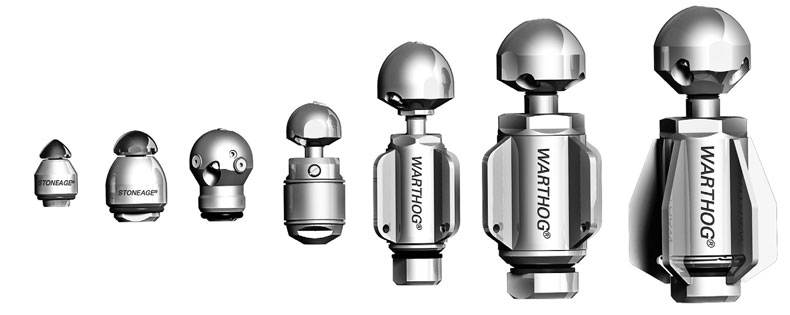
2. Rotating Nozzles (Warthog & Similar)
This is where the magic happens. The Warthog nozzle spins at high RPM and delivers a controlled, rotating jet pattern that scours pipe walls 360 degrees. It cuts roots, strips bio-film, and removes scale buildup that a penetrator can’t touch.
- Warthog WV-1/4: For 2-4 inch lines — residential laterals, kitchen drains
- Warthog WT-3/8: For 4-8 inch lines — commercial mains, restaurant grease lines
- Warthog WS-1/2: For 6-12 inch lines — municipal sewers, industrial pipes
If you own one nozzle beyond the basics, make it a Warthog. It’s the single biggest upgrade most jetter operators can make.
3. Flushing Nozzles
After you’ve cut through the blockage and scoured the walls, a flushing nozzle pushes all that debris downstream and out of the pipe. High rear thrust, wide spray pattern. This is your finishing pass.
- Best for: Final cleanup, moving loose debris, sand and sediment removal
- Not for: Cutting through blockages — there’s no forward jet power
4. Reaper Nozzles by Hydra-Flex
The Reaper nozzle is a newer entry that’s turning heads. It combines forward penetration with aggressive rear-firing jets in a design that vibrates as it moves — shaking loose stubborn deposits that other nozzles leave behind. It’s especially effective on bio-film and mineral scale.
- Best for: Bio-film removal, mineral scale, lines with mixed blockage types
- Standout feature: Vibration action breaks deposits loose before the water hits them
Nozzle-to-Job Matching Chart
| Job Type | First Pass Nozzle | Second Pass Nozzle |
|---|---|---|
| Grease-clogged kitchen line | Penetrator (open the line) | Warthog WT-3/8 + hot water (scour walls) |
| Root intrusion in lateral | Warthog WV-1/4 (cut roots) | Flushing nozzle (clear debris) |
| Municipal main line cleaning | Penetrator (break through) | Warthog WS-1/2 (full-bore cleaning) |
| Bio-film / scale buildup | Reaper (vibration + cutting) | Flushing nozzle (clear debris) |
| Preventive maintenance contract | Warthog (scour walls) | Flushing nozzle (final cleanup) |
| Sand / sediment in storm drain | Flushing nozzle (high-volume push) | — |
Pipe Size and Nozzle Sizing Rules
Running the wrong size nozzle in a pipe is like wearing boots three sizes too big — you’ll trip over yourself. Here’s the rule of thumb:
- Nozzle diameter should be about 1/3 of the pipe diameter — this gives enough clearance for water to flow back around the nozzle and carry debris out
- 1/4″ hose + WV-1/4 Warthog: 2-4 inch residential lines
- 3/8″ hose + WT-3/8 Warthog: 4-8 inch commercial lines
- 1/2″ hose + WS-1/2 Warthog: 6-12 inch municipal and industrial lines
Don’t try to force a 1/2″ nozzle into a 3″ pipe. And don’t waste a big nozzle on a small line — you’ll lose pressure and cleaning power. Match the nozzle to the pipe, every time.
Nozzle Care and Maintenance
A $300 nozzle that’s maintained properly lasts years. One that’s neglected burns out in months. Basic rules:
- Inspect jets after every job — Look for clogs, wear, or damage. A single blocked jet throws off the spray pattern
- Flush with clean water before storing — Debris left inside corrodes the internals
- Store in a padded case — Nozzles banging around in a toolbox chip the ceramic inserts
- Rebuild rotating nozzles on schedule — Warthogs have a rebuild kit. Follow the manufacturer’s interval (typically every 200-300 hours)
- Never run dry — Nozzles need water flowing to lubricate the internals. Running dry destroys bearings fast
Frequently Asked Questions
What’s the best all-around jetter nozzle for a plumber?
The Warthog rotating nozzle is the single most versatile nozzle you can own. It handles roots, grease, bio-film, and general cleaning. If you’re buying one upgrade nozzle, start with the Warthog WV-1/4 for residential work or the WT-3/8 for commercial lines.
How many nozzles do I need to start jetting?
Start with three: a penetrator for opening blockages, a Warthog for cleaning, and a flushing nozzle for finishing. That covers 90% of the jobs you’ll encounter. Add a Reaper nozzle later when you’re handling bio-film and scale work regularly.
Can I use the same nozzle on every job?
You can — but you’ll get mediocre results on every job instead of great results. A jetter nozzle guide like this exists because each nozzle excels at a specific task. Using the right nozzle cuts your job time in half and delivers a cleaner pipe that keeps customers calling back for maintenance contracts — not emergency callbacks.
Ready to Take the Next Step?
Call HotJet USA today at 1-800-624-8186 to talk with a jetter expert about which nozzles are right for your business. Every HotJet II trailer mounted sewer jetter comes ready to work — and we’ll help you pick the nozzle package that matches the jobs you’re running. Visit hotjetusa.com to explore our full lineup and accessories.
HotJet USA is the manufacturer of trailer mounted sewer and drain line jetters. For over 25 years, we’ve specialized in hot and cold water hydro jetting equipment — trailer mounted, skid mounted, and truck mounted. We also offer comprehensive jetter training classes. Call today for expert advice!