Jetter Financing and Section 179 — How to Buy Equipment the Tax Code Pays For
Updated August 2026 | By HotJet USA
Most guys who put off buying a machine tell us the same thing: “I can’t come up with $50,000 right now.” Fair enough. But that’s not how anybody buys equipment in this trade. Jetter financing turns a five-figure purchase into a monthly payment your jobs cover — and Section 179 lets you write off the whole machine the year you put it to work. Here’s exactly how both pieces fit together, with real numbers.
Table of Contents
- Why Paying Cash Is Usually the Wrong Move
- How Jetter Financing Actually Works
- Section 179 — The Part Most Contractors Miss
- The Real Math: Payment vs. Revenue
- What Lenders Look At
- Mistakes That Cost You Money
- Frequently Asked Questions
Why Paying Cash Is Usually the Wrong Move
We’re not against cash. We’re against draining your operating account to buy a machine that hasn’t earned a dime yet.
Your working capital is what covers payroll when a customer pays late, buys the nozzle that breaks on a Friday, and keeps the truck insured. Dump it all into a jetter and you own a great machine with no cushion behind it.
- Cash buys one thing. Financing lets you buy the machine and keep the reserve.
- The machine pays for itself as it goes. A jetter starts producing revenue the first week. A payment schedule matches that timing. A drained bank account doesn’t.
- You keep your borrowing power. An equipment loan builds business credit. Spending savings builds nothing.
The guys who grow fastest in this business aren’t the ones who waited until they had $53,000 sitting around. They’re the ones who got a machine working and let the jobs pay for it.
How Jetter Financing Actually Works
Equipment financing is its own category — it’s not a personal loan and it’s not a credit line. The jetter itself is the collateral, which is why the terms beat almost anything else you’d qualify for.
The basic structure:
- Term — typically 36 to 60 months on a trailer jetter.
- Down payment — often 10–20%, and some programs run $0 down for established businesses.
- Collateral — the equipment secures the loan, so you’re usually not pledging your house.
- Approval speed — application-only approvals under a certain dollar amount can come back same-day or next-day.
Because HotJet USA sells factory-direct, there’s no dealer markup baked into the amount you’re financing. You’re borrowing against the real price of the machine, not a price that got padded on its way to you. Over a 60-month term, that difference is real money.
Section 179 — The Part Most Contractors Miss
Here’s where financing stops being just a payment plan and starts being a strategy.
Section 179 of the IRS tax code lets a business deduct the full purchase price of qualifying equipment in the year it’s placed in service — instead of depreciating it a slice at a time over five or seven years. A trailer mounted sewer jetter is exactly the kind of equipment it was written for.
Now the part that surprises people: you can finance the machine and still deduct the full purchase price. Not the amount you paid down. Not the payments you made this year. The full price of the equipment, assuming you placed it in service before year-end and you’re within the annual limits.
Think about what that means. You put money down, make a few payments, and take a deduction based on the entire machine. It’s entirely possible for your first-year tax savings to exceed what you actually paid out that year.
The rules that matter:
- Placed in service — the machine has to be delivered and usable by December 31, not just ordered. Waiting until late December is cutting it close on a build.
- Business use — must be used more than 50% for business. For a jetter, that’s not a hard test to pass.
- Annual limits — there’s a deduction cap and a total-equipment-purchase phase-out threshold, and both get adjusted for inflation. Confirm the current year’s numbers.
- You need profit to deduct against — Section 179 can’t push you below zero taxable income. Bonus depreciation may cover what’s left over.
We’re equipment guys, not accountants. The concept is straightforward but your situation isn’t ours — run the actual numbers past your CPA before you sign anything. What we can tell you is that contractors who talk to their accountant before buying usually buy sooner, and buy the machine they actually wanted.
The Real Math: Payment vs. Revenue
A payment only matters next to what the machine brings in. So let’s put them side by side.
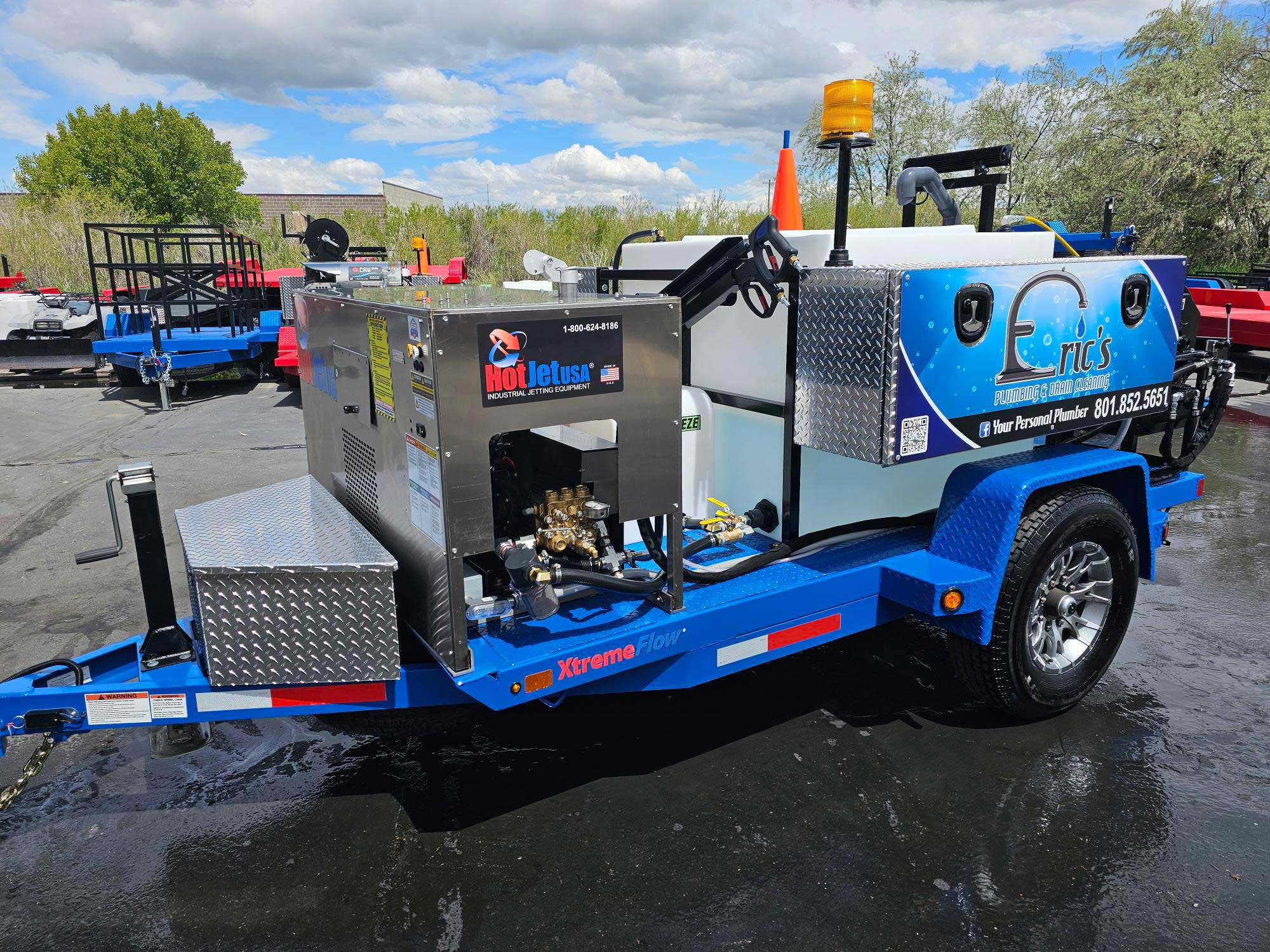
Take a hot water trailer jetter in the low $50,000s on a 60-month term. Depending on your credit and down payment, you’re looking at roughly $950–$1,150 a month. Call it $1,000 to keep the math clean.
| Scenario | Jobs Needed Per Month | What’s Left Over |
|---|---|---|
| Residential laterals at $400/job | 3 jobs | Everything past job #3 |
| Commercial jetting at $1,200/job | 1 job | Everything past job #1 |
| Restaurant grease trap route, 10 accounts | Under half the route | Recurring revenue, every month |
Three drain calls a month. That’s the bar. Most guys running a jetter clear that in the first week — and a hot water machine gets you into F.O.G. work that cold water simply can’t touch, which is where the recurring restaurant money lives.
Now layer the tax treatment on top. Deduct the full purchase price in year one, and the effective cost of that machine drops by whatever your tax bracket saves you. The payment stays the same. Your tax bill doesn’t.
What Lenders Look At
Approval is more forgiving on equipment than most contractors expect, because the machine backs the loan. Generally they’re weighing:
- Time in business — two-plus years is the sweet spot, but startups get approved with a stronger down payment or a personal guarantee.
- Personal credit — matters most for newer businesses. Established shops lean more on business history.
- Cash flow — bank statements showing the payment is comfortable.
- The equipment itself — lenders like well-built machines from real manufacturers. It’s collateral they can actually resell.
That last one cuts against the bargain-hunters. A no-name jetter from a company with a P.O. Box for an address is harder to finance and harder to unload — because nobody wants it, including the lender.
Mistakes That Cost You Money
- Buying the cheapest machine to get the smallest payment. Two hundred bucks a month in savings means nothing when the machine is down and you’re turning away work. Size for the jobs you want, not the payment you want.
- Waiting until December. Placed in service means delivered and running. Build and delivery time is real. Start the conversation in Q3.
- Undersizing on GPM. The single most common regret we hear. Flow moves debris — if you’re not sure where to land, read our 7 things to know before buying a jetter first.
- Skipping the CPA call. A twenty-minute conversation can change what you can afford. Make it before you sign, not in April.
- Financing a padded price. Dealer markup gets financed too, with interest on top. Factory-direct keeps that off the loan entirely.
Frequently Asked Questions
Can I really deduct the full price if I financed the jetter?
Yes — Section 179 is based on the purchase price of equipment placed in service, not on how much you’ve paid down. That’s what makes financing plus Section 179 such a strong combination. Confirm the current year’s limits and your own eligibility with your accountant.
What credit score do I need for jetter financing?
There’s no universal cutoff. Equipment loans are secured by the machine, so approvals happen across a wide credit range — a larger down payment or a personal guarantee offsets weaker credit. Newer businesses get approved regularly.
How long does approval take?
Often same-day or next-day for straightforward applications. Larger amounts may need financial statements, which adds a few days.
Should I finance a used jetter instead?
Used equipment can qualify for Section 179 too, as long as it’s new to you. The catch is condition and support — a used machine with no warranty and no factory behind it is a rough thing to owe money on. Check our current lineup before assuming used is the cheaper path.
When should I start the process to get the deduction this year?
Q3 into early Q4. You need build time, delivery, and the machine actually in service by December 31. Contractors who call in November are usually racing the calendar.
Ready to Take the Next Step?
Call HotJet USA today at 1-800-624-8186 to talk with a jetter expert. Whether you’re buying your first jetter or upgrading your fleet, we’ll help you find the right machine for your business. Visit hotjetusa.com to explore our full lineup.
HotJet USA is the manufacturer of trailer mounted sewer and drain line jetters. For over 25 years, we’ve specialized in hot and cold water hydro jetting equipment — trailer mounted, skid mounted, and truck mounted. We also offer comprehensive jetter training classes. Call today for expert advice!