Enclosed Trailer Jetter — Why Serious Drain Cleaning Contractors Choose Protected Setups
Updated March 2026 | By HotJet USA
An enclosed trailer jetter isn’t just a preference — for contractors working year-round in harsh climates or running multi-crew operations, it’s the only setup that makes sense. This guide breaks down exactly what you get with an enclosed trailer jetter, who it’s built for, and how it stacks up against an open trailer so you can make the right call before you spend a dollar.
Table of Contents
- What Is an Enclosed Trailer Jetter?
- Open vs. Enclosed: The Real Differences
- Who Should Buy an Enclosed Trailer Jetter
- Cold Weather and Year-Round Operation
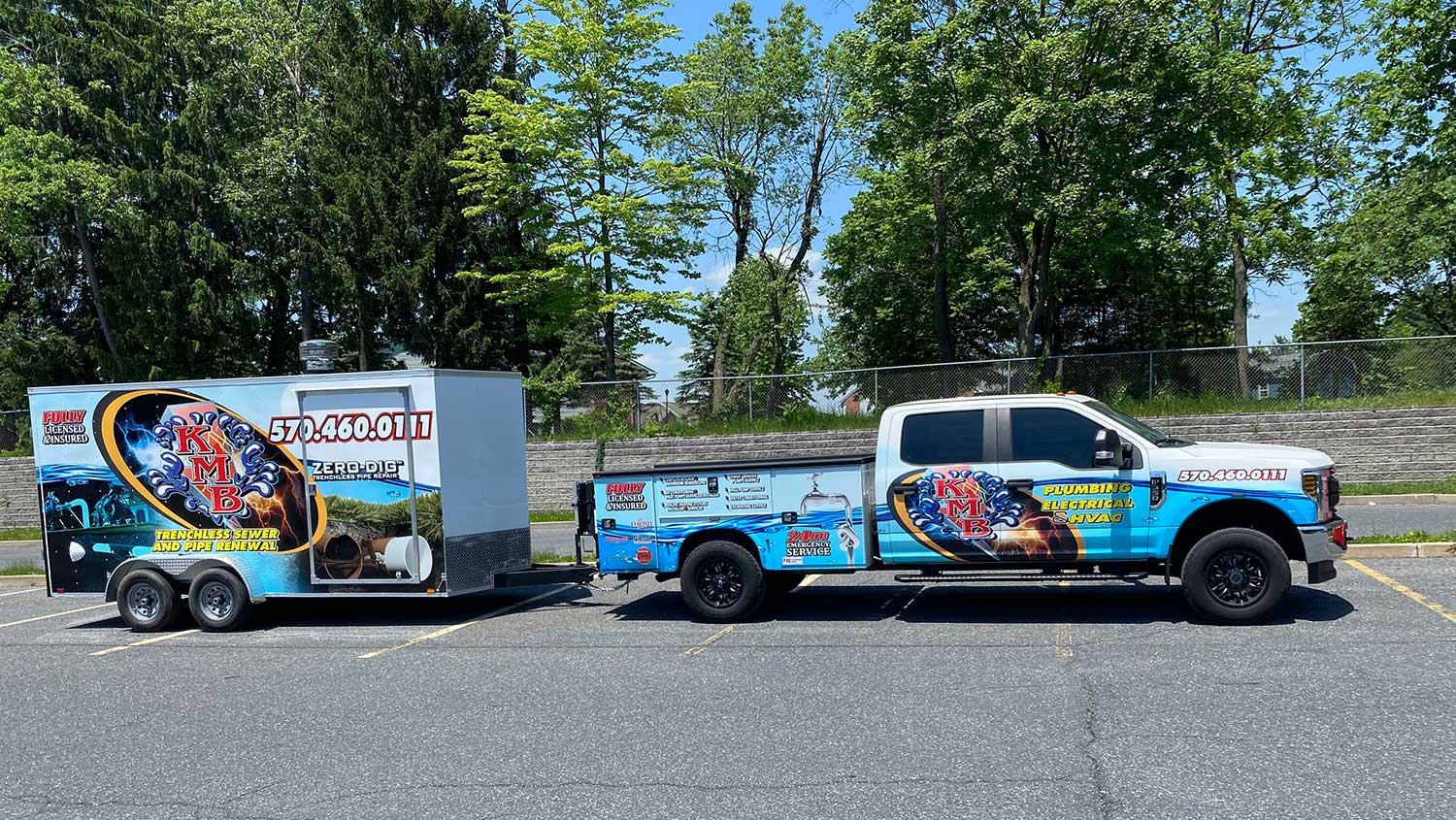
- Security, Branding, and Professional Image
- HotJet USA Enclosed Options
- Frequently Asked Questions
What Is an Enclosed Trailer Jetter?
An enclosed trailer jetter is a hydro jetting unit mounted inside a fully enclosed trailer — four walls, a roof, lockable doors, and typically insulation or heating capability. Your pump, engine, hose reel, water tank, and accessories all live inside a protected shell instead of riding out in the open on a flatbed or open-frame trailer.
Open trailers work fine in mild climates and light-duty use. But when temperatures drop, gear walks off job sites, or you’re sending a crew across town in the rain, the math changes fast.
- Protection from weather — Engines and pumps last longer when they’re not soaked every other week
- Security — Lockable doors mean your $50K+ investment isn’t walking off overnight
- Year-round operation — Proper insulation and heating options keep you running when competitors shut down
- Professional appearance — Full custom wrap opportunities turn every job into a moving billboard
Open vs. Enclosed: The Real Differences
Let’s cut through the fluff. Here’s how the two setups compare on the metrics that actually matter to a working contractor:
| Factor | Open Trailer Jetter | Enclosed Trailer Jetter |
|---|---|---|
| Weather protection | None — fully exposed | Full protection, insulation options |
| Security | Equipment visible and accessible | Lockable doors, concealed equipment |
| Cold weather operation | Freeze risk, winterization required | Heatable interior, run year-round |
| Branding potential | Limited (frame + tank wraps) | Full exterior wrap, signage on all sides |
| Setup/breakdown time | Faster access to gear | Slightly more setup, but organized |
| Upfront cost | Lower | Higher — typically $5K–$10K more |
| Long-term equipment life | More wear from exposure | Longer lifespan, less corrosion |
The upfront cost difference shrinks fast when you factor in one theft claim, one freeze-damaged pump, or one season of sitting idle because your open-frame unit can’t operate in 20°F weather.
Who Should Buy an Enclosed Trailer Jetter
Not every contractor needs an enclosed setup — but if any of these fit your situation, it’s worth the premium:
- Year-round contractors in cold climates — If you work through winter in the Midwest, Northeast, or Mountain West, an enclosed setup with heat isn’t a luxury. It’s what keeps you on the job when everyone else is parked.
- Multi-crew operations — When you’re sending crews out without you, organization matters. Enclosed trailers keep every nozzle, hose section, and camera in its place. No excuses for missing gear.
- Contractors in high-theft areas — Open trailers are magnets. A HotJet II at $52,995 sitting in a parking lot overnight on an open trailer is an insurance claim waiting to happen.
- Businesses focused on brand image — Municipalities, property management companies, and commercial clients notice professionalism. A fully wrapped enclosed trailer signals a real business, not a one-truck operation.
- Contractors adding a second unit — If you’re scaling your fleet, the second unit should be your daily driver. Go enclosed and let the open trailer handle lighter seasonal work. See our custom trailer options for what’s possible.
Cold Weather and Year-Round Operation
This is the biggest reason contractors upgrade to an enclosed trailer jetter — and it’s the one that pays back the fastest.
When temperatures drop below freezing, water left in pump housings, hose reels, and fittings expands. One night below 28°F can crack a pump head that costs $2,000 to replace. On an open trailer, you’re winterizing after every job or gambling. On a properly insulated enclosed trailer with a small diesel heater, you leave the unit ready to run and pull it out the next morning without a second thought.
Mark T. from northern Ohio told us: “I used to lose 3 to 4 months every winter. Now I work straight through. The enclosed trailer paid for the price difference in the first season alone.”
If you’re in a region that sees hard winters, talk to us about the insulation and heating packages we build into our enclosed units. A small propane or diesel heater keeps the interior above freezing all night for pennies.
For more on operating in tough conditions, check out our post on 7 things to know before buying a jetter — cold-weather prep is covered in detail.
Security, Branding, and Professional Image
Let’s talk about two things contractors don’t talk about enough: theft and first impressions.
Security: Nozzles, cameras, hose sections, wireless remotes — the accessories on a jetter are expensive and portable. On an open trailer, everything’s visible. On a job site, anyone walking by can see your gear. An enclosed trailer with quality locks removes the temptation entirely. Some contractors run padlocks; others go with deadbolts and hasps. Either way, you sleep better.
Branding: Your trailer is your most visible marketing asset. An open-frame trailer with a tank and a pump tells people you have equipment. A fully wrapped enclosed trailer with your logo, phone number, and services on all four sides tells people you run a real operation. When you pull into a commercial property or a city job, the enclosed trailer signals credibility before you say a word.
HotJet USA builds custom powder-coated trailers and offers full side signage packages. We can build your enclosed unit with your branding from the start — not an afterthought.
HotJet USA Enclosed Options
We build enclosed trailer jetters around our full lineup — from the XtremeFlow II cold water series to the HotJet II hot water units and the heavy-duty HotJet III Dual Engine for municipal-grade work. Here’s how the most popular units pair with enclosed builds:
- HotJet II Single Axle ($52,995) — 10 GPM @ 4,000 PSI, 35HP Vanguard. Most popular enclosed build for plumbing contractors doing commercial and residential laterals.
- HotJet II Diesel Yanmar ($79,995) — Hot water diesel. Built for contractors who want maximum F.O.G. cutting power and the fuel efficiency of diesel on long days.
- XtremeFlow II Honda ($39,995) — Cold water, hydraulic hose reel. Great entry-level enclosed build for contractors starting out or adding a second unit focused on residential work.
- HotJet III Dual Engine ($79,995) — 18 GPM @ 4,000 PSI, municipal-grade. If you’re running city contracts or industrial accounts, this is the enclosed unit that handles it.
Every enclosed build comes with our custom trailer configuration options — axle type, hose reel placement, door configuration, lighting, and side signage. We don’t do cookie-cutter builds.
We’re also a GSA contractor — so municipalities and government agencies can buy direct through the GSA schedule. Call us and we’ll walk you through the process.
Frequently Asked Questions
How much more does an enclosed trailer jetter cost compared to an open trailer?
Typically $5,000–$10,000 more depending on trailer size, insulation, and custom options. For contractors in cold climates or high-theft areas, this cost is recovered quickly — one avoided theft claim or one season of year-round operation covers the gap. The long-term equipment lifespan benefit adds further value over time.
Can I add heat to an enclosed jetter trailer?
Yes. HotJet USA enclosed builds can be configured with propane or diesel heater options that keep the interior above freezing overnight. This is especially important for the pump housing and hose reel, which are the most vulnerable to freeze damage. Ask our team about heating package options when you call.
Does an enclosed trailer jetter require more maintenance?
The trailer itself needs standard maintenance — door hinges, seals, lighting. But the jetter equipment inside typically requires less maintenance over time because it’s protected from UV exposure, rain, road spray, and temperature extremes. Most contractors find their pump and engine last significantly longer in an enclosed setup.
What size enclosed trailer do I need for a jetter unit?
Most single-engine trailer jetters fit in a 16–20 ft enclosed trailer with room for accessories and hose storage. Dual-engine units like the HotJet III typically need 20–24 ft. We size the trailer to the unit and your storage needs — call us and we’ll spec it out for your specific operation.
Ready to Take the Next Step?
Call HotJet USA today at 1-800-624-8186 to talk with a jetter expert. Whether you’re buying your first jetter or upgrading your fleet, we’ll help you find the right machine for your business. Visit hotjetusa.com to explore our full lineup.
HotJet USA is the manufacturer of trailer mounted sewer and drain line jetters. For over 25 years, we’ve specialized in hot and cold water hydro jetting equipment — trailer mounted, skid mounted, and truck mounted. We also offer comprehensive jetter training classes. Call today for expert advice!