Cold Water vs Hot Water Jetter — Which One Is Right for Your Drain Cleaning Business?
Updated March 2026 | By HotJet USA
This is the first big decision every plumber faces when shopping for a trailer mounted sewer jetter: do you go with a cold water jetter or spend more on hot water? The answer depends on the jobs you’re chasing, the lines you’re cleaning, and how serious you are about handling everything that comes your way. Here’s the real breakdown — no fluff, just the facts you need to make the right call.
Table of Contents
- The Core Difference — Why Temperature Matters
- Cold Water Jetters — What They Do Best
- Hot Water Jetters — What They Do Best
- Side-by-Side Comparison
- Which Jobs Demand Hot Water?
- The ROI Argument
- Frequently Asked Questions
The Core Difference — Why Temperature Matters in Drain Cleaning
Every drain line jetter does the same basic thing: pushes high-pressure water through a nozzle to blast debris out of pipes. The difference is what happens when that water hits grease, bio-film, soap scum, and fats.
Cold water pushes these materials downstream. It breaks them loose from the pipe wall, but they re-solidify further down the line. You’ve cleaned one section and created a clog somewhere else.
Hot water (180°F-210°F) actually dissolves grease and fats on contact. It melts them into liquid form so they flow out of the system completely. That’s the difference between a temporary fix and a real solution — and it’s why hot water jetter operators can charge more per call.
Cold Water Jetters — What They Do Best
Don’t let anyone tell you cold water jetters are “lesser” equipment. For the right applications, they’re excellent — and they cost less to buy and maintain.
- Root cutting — Roots don’t care about water temperature. High-pressure water with the right nozzle cuts roots regardless of heat. A XtremeFlow cold water jetter handles root intrusion just as well as any hot water unit.
- Sand, silt, and sediment — Storm drains, construction runoff, and sediment buildup respond to pressure and flow, not heat.
- General pipe flushing — Routine maintenance on lines that don’t have grease issues is a perfect fit for cold water.
- Lower price point — Cold water jetters start around $39,995 (XtremeFlow II Honda), making them more accessible for shops just getting into jetting.
- Simpler maintenance — No burner, no heater coil, no fuel system for the heater. Fewer components means fewer things to maintain.
Hot Water Jetters — What They Do Best
If your phone rings with grease calls, kitchen line backups, restaurant drain emergencies, or commercial F.O.G. complaints — you need hot water. Period.
- Grease and F.O.G. removal — This is the killer app. Hot water melts and removes grease completely instead of pushing it downstream. Read more about breaking bio-film in drain lines.
- Restaurant and commercial lines — Kitchen drains, grease traps, and food processing lines need heat. Cold water is a temporary fix that guarantees a callback.
- Bio-film and soap scum — Residential lines build up layers of soap, detergent, and organic material that hot water strips away.
- Premium pricing — Hot water jetter operators charge 20-30% more per call because the results are visibly better and last longer. Customers don’t call back next month.
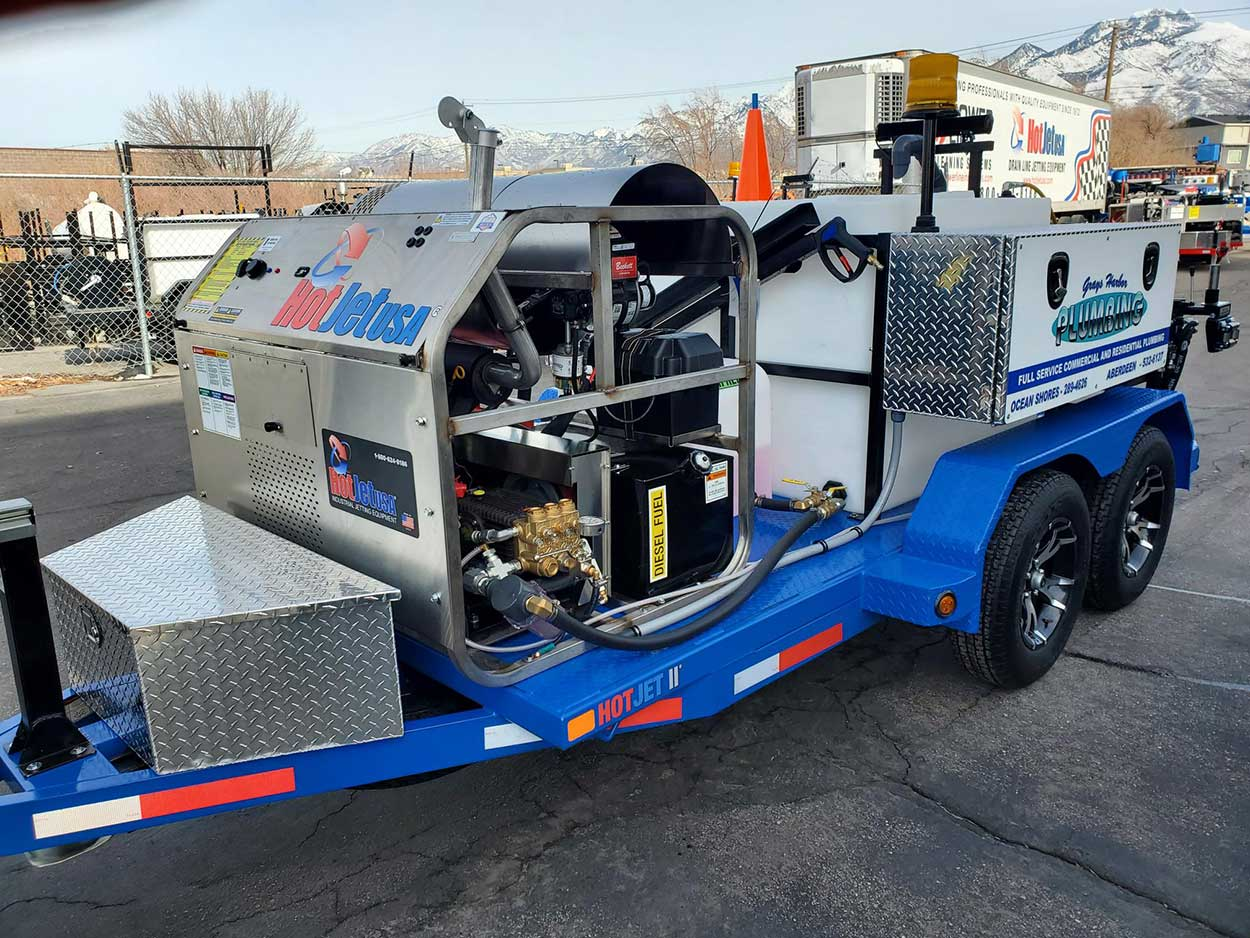
- Year-round versatility — A HotJet II runs hot OR cold. Flip a switch. You’re never limited to one mode.
Side-by-Side Comparison
| Feature | Cold Water Jetter | Hot Water Jetter |
|---|---|---|
| Starting Price | ~$39,995 (XtremeFlow II) | ~$52,995 (HotJet II) |
| Grease Removal | Pushes grease downstream | Melts and removes grease completely |
| Root Cutting | Excellent | Excellent |
| Pipe Sizes | 2″–12″ | 2″–12″ |
| Maintenance Complexity | Lower — no burner/heater | Moderate — burner and coil maintenance |
| Revenue Per Call | Standard rates | 20-30% premium |
| Callback Rate | Higher on grease jobs | Lower — grease is fully removed |
| Best For | Roots, sediment, storm drains | Grease, bio-film, restaurants, commercial |
Which Jobs Demand Hot Water?
Here’s a quick decision guide. If more than half your calls fall in the “hot water” column, the investment pays for itself fast.
- Restaurant kitchen drains — Hot water. Always.
- Residential root intrusion — Cold water is fine.
- Commercial grease trap lines — Hot water. No question.
- Storm drain flushing — Cold water.
- Hospital/hotel/university kitchen lines — Hot water.
- Municipal sanitary sewer maintenance — Either works; hot water is better for areas near commercial zones.
- Construction site cleanup — Cold water.
- Bio-film and soap buildup in residential lines — Hot water gives a permanent fix.
The ROI Argument — Why Smart Plumbers Go Hot
Let’s talk money. A HotJet II hot water jetter costs about $13,000 more than a comparable cold water unit. Here’s how fast that pays back:
- Charge $50 more per call with hot water capability — that’s conservative
- Run 5 calls per day, 5 days a week = 25 calls/week
- $50 x 25 = $1,250 extra per week
- $13,000 price difference / $1,250 = Paid off in 10-11 weeks
After that, every hot water premium dollar goes straight to your bottom line. And you’ll get the calls that cold-water-only competitors can’t handle — the grease jobs, the restaurant accounts, the commercial maintenance contracts. Read more about growing your business in our startup tips guide.
Frequently Asked Questions
Can a hot water jetter also run cold water?
Yes. Every HotJet II runs hot or cold — you simply choose whether to engage the burner. It’s two machines in one. When you don’t need heat, run it cold and save fuel. When grease shows up, flip the switch.
Is a cold water jetter enough to start a jetting business?
Absolutely. Many successful drain cleaning businesses started with a cold water jetter and upgraded to hot water later as their client base grew. The 7 Things to Know Before Buying a Jetter guide covers this decision in detail. Start with what you can afford and grow from there.
How much more does a hot water jetter cost to operate?
The main additional cost is fuel for the burner — typically diesel or kerosene. On an average job, you’ll use $10-$20 of additional fuel to heat the water. That’s easily covered by the premium you charge for hot water service.
Ready to Take the Next Step?
Call HotJet USA today at 1-800-624-8186 to talk with a jetter expert about whether hot water or cold water is the right fit for your business. We’ll help you spec the right machine and walk you through financing options that make sense. Visit hotjetusa.com to explore our full lineup.
HotJet USA is the manufacturer of trailer mounted sewer and drain line jetters. For over 25 years, we’ve specialized in hot and cold water hydro jetting equipment — trailer mounted, skid mounted, and truck mounted. We also offer comprehensive jetter training classes. Call today for expert advice!